

Car Key Battery Replacement: Signs, Types and Reprogramming
Car key battery replacement is often the correct first step when remote range becomes shorter, buttons respond intermittently or a vehicle displays a low-key-battery warning. It is not a cure for every key fault: worn switches, damaged circuit boards, lost synchronisation and vehicle-side problems can produce similar symptoms. This guide explains how to recognise a weak battery, choose the correct cell and test the key safely.
Signs a car key battery needs replacing
Common signs include needing to stand closer to the vehicle, pressing a button more than once, an occasional failure to unlock, or a dashboard message such as “key battery low”. A proximity key may still start the vehicle when held against a designated backup point even though normal keyless detection has weakened.
Gradual loss of range usually points toward the battery. A sudden failure after a drop, impact or water exposure suggests physical or electronic damage and deserves inspection.
Remote battery, transponder and starting the car
Many keys contain separate systems. The coin cell normally powers remote buttons and, on a smart key, proximity communication. A passive immobiliser transponder in a conventional key may operate without that battery. This is why some vehicles still start with a flat remote battery while central locking buttons do not work.
The arrangement varies by model. Consult the vehicle handbook rather than assuming that every key behaves the same way.
How to identify the correct battery
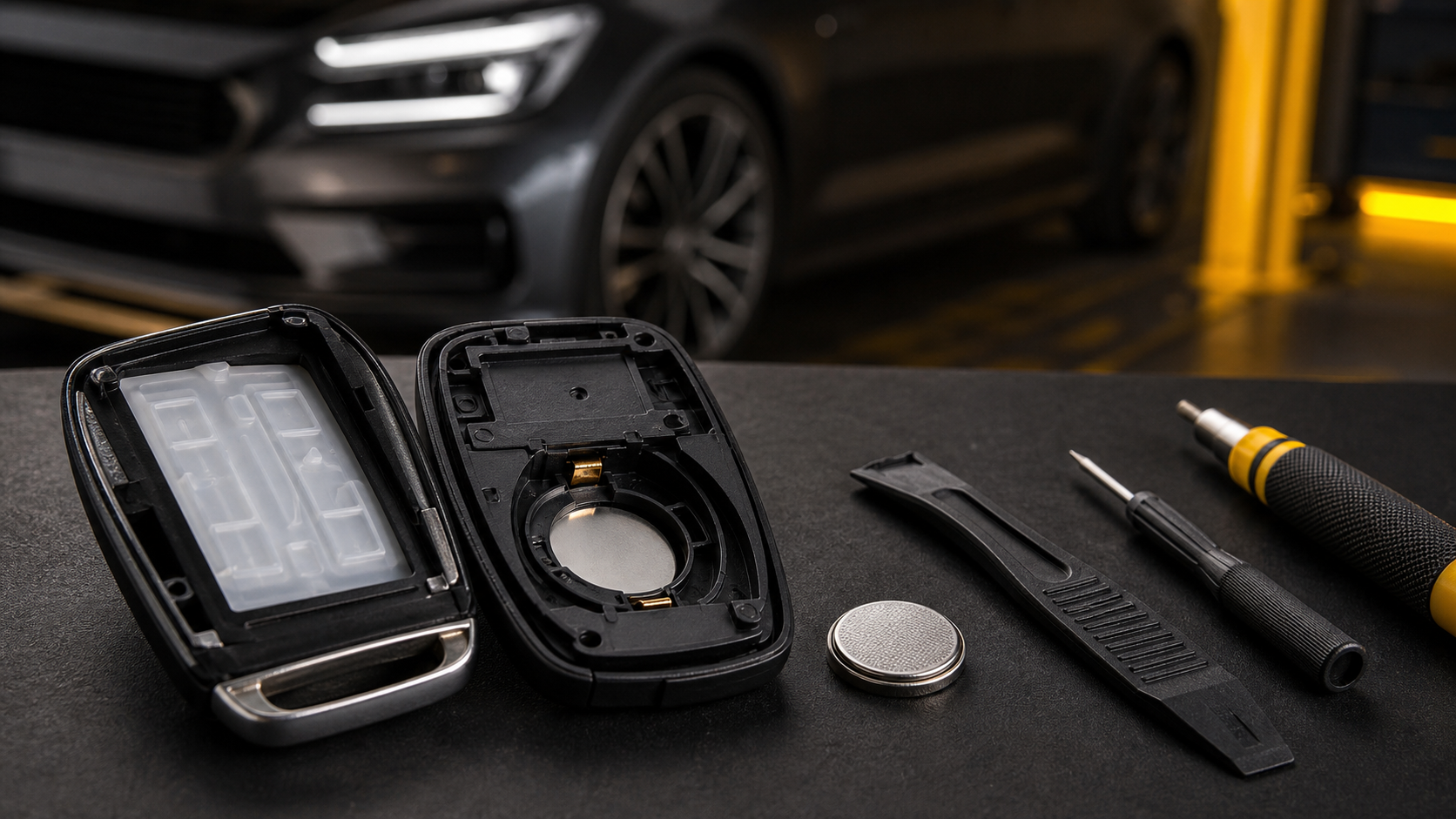
Open the case only by the manufacturer-approved method and read the code printed on the existing cell. CR2032, CR2025 and CR2016 batteries can look similar but differ in thickness or capacity. Installing a “close enough” battery can damage contacts or create an unreliable connection.
Use a fresh, reputable cell with the correct voltage and code. Check the expiry date and avoid mixing batteries in designs that use more than one cell.
Before opening the key
- Work on a clean, well-lit surface.
- Remove the emergency blade only as described in the handbook.
- Use a suitable plastic opening tool where possible.
- Photograph the old battery orientation before removal.
- Keep small parts away from children and pets.
Do not force a seam that does not release. Some keys use hidden screws or a sliding cover, and excessive leverage can crack the shell or damage the seal.
Safe car key battery replacement steps
Release the cover, note which battery face is positive, and lift the cell without bending the metal contacts. Inspect for corrosion, contamination or a loose contact. Fit the correct new cell in the same orientation and close the housing evenly so the seal and clips sit correctly.
Test every button beside the vehicle, then check normal starting or proximity operation. Dispose of the old battery through an appropriate battery-recycling point; coin cells must never be left loose where a child could swallow them.
Does a key need reprogramming after a battery change?
Most keys do not require immobiliser programming simply because the coin cell was replaced. The authorised transponder data is normally retained. Some remote systems may need a resynchronisation procedure, particularly if the key was without power for a long period or buttons were pressed while the battery was removed.
Programming and resynchronisation are not the same thing. Follow the handbook procedure if one is provided. Avoid random online sequences because an incorrect process can change settings or mask the real fault. Our car key programming guide explains the distinction.
What if the new battery does not solve the problem?
Confirm the cell code, orientation and contact pressure. Try the spare key if available: if both keys fail in the same location, the vehicle battery, receiver, antenna or radio interference may be involved. If only one key fails, worn buttons, cracked solder joints, water damage or a damaged circuit board become more likely.
See why a key fob stops working and intermittent car key faults for structured checks.
Keyless vehicles and emergency starting
Many keyless vehicles provide a backup recognition position: it may be beside the steering column, inside a cup holder, against the start button or elsewhere in the cabin. The handbook identifies the exact point. This can allow the immobiliser to recognise the key at very short range when the coin cell is weak.
Use that procedure to move the vehicle safely, then replace or diagnose the battery promptly rather than relying on emergency operation.
Battery warnings that should not be ignored
A repeated low-battery warning means the available reserve is reducing. Replacing the battery before complete failure is inexpensive and avoids being unable to unlock remotely at an inconvenient time. If a new battery triggers the same warning immediately, the cell may be old, incorrectly fitted or the key may have another fault.
Water, corrosion and damaged contacts
White or green residue, staining, heat marks or a swollen cell indicate that simple replacement may not be enough. Do not power a wet circuit board repeatedly. Remove the battery if this can be done safely and arrange professional assessment. Our water-damaged car key guide covers immediate actions.
When the key shell is worn or cracked
A loose battery cover can allow movement and moisture into the key. A replacement shell may be suitable if the electronics and transponder remain healthy, but transferring components requires care. A transponder chip can be small and easily lost or damaged.
Read repair or replace a damaged key before deciding whether a shell, switch repair or full replacement is appropriate.
How long should a car key battery last?
Service life depends on the key design, battery quality, usage and storage. Proximity keys communicate more frequently than basic remotes and may consume power faster. Extreme temperature, moisture and keeping the key continuously close to the vehicle can also affect performance.
A fixed replacement interval is less useful than responding to reduced range and vehicle warnings while keeping a verified spare key ready.
Choosing a replacement battery
Match the printed type exactly and buy from a reliable source with good stock turnover. Avoid touching both flat faces excessively because residue can affect contact quality. Never recharge a disposable lithium coin cell, and never substitute a rechargeable battery unless the manufacturer explicitly specifies one.
Car key battery help in Doncaster
If car key battery replacement does not restore reliable operation, Smart Auto Keys can help distinguish a battery issue from a damaged remote, programming fault or vehicle-side problem. Bring all available keys and describe when the fault began.
Visit our key and lock fixing service, explore spare car keys in Doncaster, or contact Smart Auto Keys for workshop or mobile options across the areas we cover.
Frequently asked questions
Will changing the battery erase my key?
Usually no. Immobiliser authorisation is normally retained, although some remotes may need model-specific resynchronisation.
Can I use a CR2032 instead of a CR2025?
Only if the vehicle manufacturer specifies it. The diameter may match, but thickness and fit differ.
Why does the car still say the battery is low?
Check battery freshness, type, orientation and contacts. A persistent warning may indicate another key fault.
Can a flat key battery stop the engine starting?
It depends on the key system. Many vehicles provide passive or emergency recognition, but some smart-key functions require adequate power.
Should I replace both key batteries together?
If both keys are the same age, replacing both with the correct fresh cells can be sensible, but test each key separately.
When should a locksmith inspect the key?
Arrange inspection when a correct new battery does not restore operation, the key is damaged, corrosion is visible or the fault is intermittent.